Radiologist Shortage in 2026: Smart Staffing Without Increasing Payroll
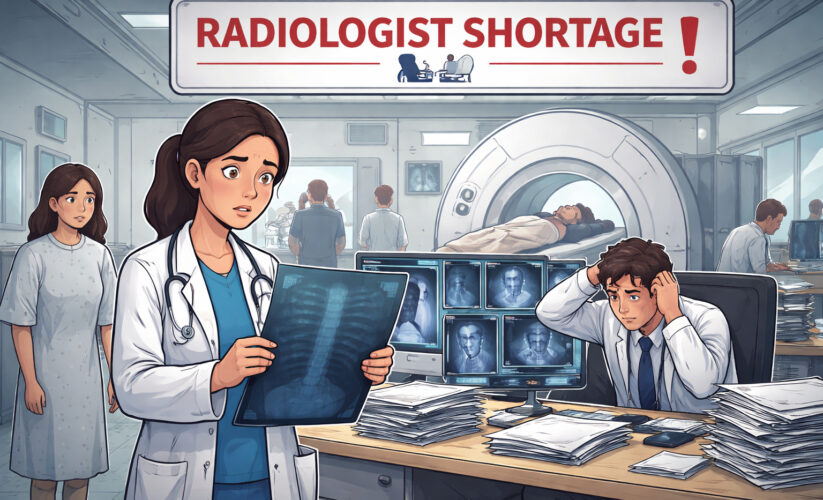
The radiologist shortage in 2026 is no longer a projected concern. It is a measurable operational challenge affecting hospitals, diagnostic centers, and multi-site health systems across the globe.
Imaging demand continues to rise. CT scans, MRIs, interventional procedures, oncology monitoring, and emergency diagnostics are expanding rapidly. At the same time, experienced radiologists are retiring, burnout rates remain high, and recruitment costs are climbing.
For healthcare leaders, the challenge is not simply about filling vacancies. The real question is this:
How can you maintain diagnostic accuracy, reduce turnaround time, and protect revenue without increasing payroll?
This guide explores practical, sustainable staffing strategies that allow radiology departments to remain efficient, compliant, and financially stable in 2026 and beyond.
Why the Radiologist Shortage Is Worsening in 2026
The workforce imbalance in radiology is driven by several structural factors.
Aging Workforce and Retirement Trends
A significant percentage of practicing radiologists are approaching retirement age. Replacing senior professionals is not immediate. Training pipelines require years, and subspecialty fellowships extend that timeline further. The supply of new radiologists is not keeping pace with demand.
Rising Imaging Volumes
Healthcare systems are experiencing sustained growth in imaging utilization due to aging populations, expanded screening programs, improved access to diagnostics, and increased reliance on imaging for clinical decision making.
Hospitals are processing more studies daily than ever before, yet staffing ratios have remained relatively static.
Growth in Subspecialty Demand
Modern medicine increasingly depends on subspecialized interpretation. Neuroradiology, musculoskeletal imaging, breast imaging, and interventional radiology require advanced expertise. Many mid-sized hospitals cannot maintain full time specialists across all domains.
Burnout and Workload Pressure
Radiologists are facing high case volumes, increasing administrative tasks, and performance metric pressures. Over time, this leads to fatigue, reduced productivity, and in some cases early retirement.
The gap between supply and demand continues to widen.
The Real Cost of Radiologist Shortage
Understaffed radiology departments affect more than scheduling. The financial and clinical consequences are significant.
Increased Turnaround Time
Delayed reporting directly impacts patient flow. Emergency departments depend on rapid interpretation. When reports are delayed, admissions slow, procedures are postponed, and discharge timelines extend.
Revenue Leakage
Unreported or delayed studies can result in billing delays and lost referrals. Radiology functions as a major revenue driver for many hospitals. Slowed output affects downstream services including surgery and oncology.
Physician Dissatisfaction
Referring clinicians rely on timely, accurate imaging reports. Extended turnaround times create frustration and may push referrals to competing facilities.
Compliance and Quality Risks
Overburdened radiologists may struggle to maintain peer review processes and quality audits. This creates accreditation and regulatory risks that can be costly.
The shortage impacts operational stability, financial performance, and patient outcomes.
Why Hiring More Radiologists Is Not Always Sustainable
The instinctive response to staffing shortages is aggressive recruitment. However, this approach has limitations.
Rising Compensation Costs
Radiologist salaries continue to increase due to high demand. Signing bonuses, relocation support, malpractice coverage, and benefits packages significantly expand long term payroll obligations.
Lengthy Recruitment Cycles
Credentialing, licensing, and onboarding processes can take several months. Immediate staffing gaps cannot always be resolved through hiring alone.
Fixed Payroll Inflation
Adding permanent staff increases fixed costs. If imaging volumes fluctuate seasonally, payroll expenses remain constant, placing pressure on margins.
Limited Availability of Subspecialists
Even with budget approval, finding highly qualified subspecialists is challenging in competitive markets.
Hospitals must move beyond traditional staffing models.
Smart Staffing Models for 2026
Sustainable radiology departments are adopting flexible, scalable workforce strategies.
Hybrid Staffing Approach
A hybrid model combines in house radiologists with external support. Core daytime coverage remains internal, while overflow, night shifts, or subspecialty reads are supported remotely.
This structure reduces burnout and improves work life balance without increasing permanent payroll.
Strategic Teleradiology Integration
Teleradiology has evolved into a structured workforce extension strategy. Hospitals can access board certified radiologists remotely, scale coverage based on demand, and provide continuous service without expanding internal headcount.
Costs align with volume rather than fixed salary commitments.
Optimized Night Coverage
Instead of maintaining full overnight staffing, hospitals can implement remote night coverage solutions. This ensures uninterrupted service while reducing overtime costs and fatigue related errors.
Subspecialty Access Without Full Time Hiring
Selective outsourcing of subspecialty cases allows hospitals to provide expert interpretation without recruiting rare specialists permanently.
Leveraging Teleradiology Without Increasing Payroll
Teleradiology, when implemented strategically, allows hospitals to convert fixed payroll expenses into variable operational costs.
Hiring a full time radiologist involves salary, benefits, insurance, continuing education, and long term financial commitments. In contrast, pay per study models align expenses directly with volume.
This flexibility protects margins during fluctuations in demand.
Cross time zone reporting models also allow daytime radiologists in one region to cover nighttime studies elsewhere, improving quality and reducing fatigue.
Scalability becomes the key advantage. During peak months, external support absorbs increased workload. During slower periods, costs decrease proportionally.
Read more : https://oshininfotech.com/remote-work-best-practices-for-radiologists/
Workflow Optimization Before Workforce Expansion
Before adding new hires, many departments discover untapped efficiency opportunities.
AI Assisted Case Prioritization
Artificial intelligence tools can flag critical findings, ensuring urgent cases are reviewed promptly. AI does not replace radiologists, but it enhances efficiency.
Structured Reporting Templates
Standardized templates reduce dictation time and improve clarity. This increases productivity while maintaining reporting quality.
PACS and RIS System Optimization
Technology inefficiencies often contribute to delays. Streamlined system integration can significantly enhance workflow.
Read more : https://oshininfotech.com/pacs-and-teleradiology-revolutionizing-medical-imaging/
Reducing Administrative Burden
Eliminating unnecessary documentation and clerical tasks allows radiologists to focus on diagnostic interpretation.
In many cases, workflow improvements free capacity equivalent to hiring additional staff.
Using Data to Predict Staffing Needs
Effective staffing decisions rely on accurate data analysis.
Hospitals should evaluate average daily imaging volumes, peak hour trends, subspecialty distribution, and radiologist productivity metrics.
Forecasting seasonal variations and measuring relative value units per radiologist allows leaders to plan proactively rather than reactively.
Data driven strategies reduce the risk of over hiring and unnecessary payroll expansion.
Case Scenario: Improving Performance Without Increasing Headcount
Consider a mid-sized hospital experiencing prolonged turnaround times during high volume months.
Instead of recruiting two additional full time radiologists, leadership implemented a hybrid staffing model, integrated remote night coverage, optimized reporting templates, and introduced AI based prioritization.
Within six months, turnaround time improved, overtime costs decreased, payroll remained stable, and referring physician satisfaction increased.
This outcome demonstrates that structural optimization can outperform traditional hiring strategies.
Partner with us : https://oshininfotech.com/teleradiology-services-for-hospitals/
Common Mistakes During Staffing Shortages
Hospitals often respond reactively. Common errors include over hiring during temporary volume spikes, relying heavily on costly locum tenens arrangements, ignoring workflow inefficiencies, and failing to diversify staffing models.
Addressing the root cause of inefficiency is more effective than expanding payroll.
Strategic Roadmap for 2026
Healthcare executives can follow a structured approach.
Conduct a comprehensive workload audit.
Analyze productivity metrics and subspecialty gaps.
Optimize technology systems and reporting processes.
Implement hybrid staffing or remote coverage where needed.
Monitor performance indicators regularly and adjust strategy accordingly.
This framework promotes sustainable growth without financial strain.
Future Outlook for Radiology Workforce
The future of radiology will likely include expanded AI integration, remote diagnostic networks, and flexible employment models.
Radiologists will remain central to patient care. However, staffing structures will become increasingly adaptive.
Organizations that embrace flexible, data driven models will maintain service excellence while protecting financial health.
Read more : https://oshininfotech.com/the-future-of-teleradiology-predictions-for-the-next-5-years/
Frequently Asked Questions About Radiologist Shortage in 2026
How severe is the radiologist shortage in 2026?
The shortage is significant in many regions, particularly in rural areas and subspecialties. Rising imaging demand and workforce aging have created persistent staffing challenges.
Can artificial intelligence replace radiologists?
No. Artificial intelligence supports prioritization and pattern detection, but clinical judgment, accountability, and complex interpretation remain the responsibility of trained radiologists.
Is teleradiology reliable and compliant?
Yes, when implemented with licensed, credentialed professionals and proper quality assurance systems. Compliance must align with regional healthcare regulations.
How can hospitals reduce radiology payroll without reducing services?
Hospitals can adopt hybrid staffing models, optimize workflows, and implement volume based external support rather than expanding fixed full time payroll.
What is the biggest risk of understaffed radiology departments?
Prolonged turnaround times, physician dissatisfaction, potential patient safety risks, and revenue loss are primary concerns.
How long does it typically take to recruit a radiologist?
Recruitment and credentialing can take several months, making immediate hiring an impractical solution for urgent shortages.
Conclusion
The radiologist shortage in 2026 represents a structural healthcare challenge rather than a temporary disruption.
Hospitals that respond strategically through workflow optimization, hybrid staffing, and scalable support models can maintain diagnostic quality without increasing payroll.
The goal is not simply to hire more professionals.The goal is to build smarter systems.
Healthcare leaders who adopt flexible and data driven staffing strategies will strengthen resilience, protect margins, and ensure high quality patient care in an increasingly demanding imaging landscape.