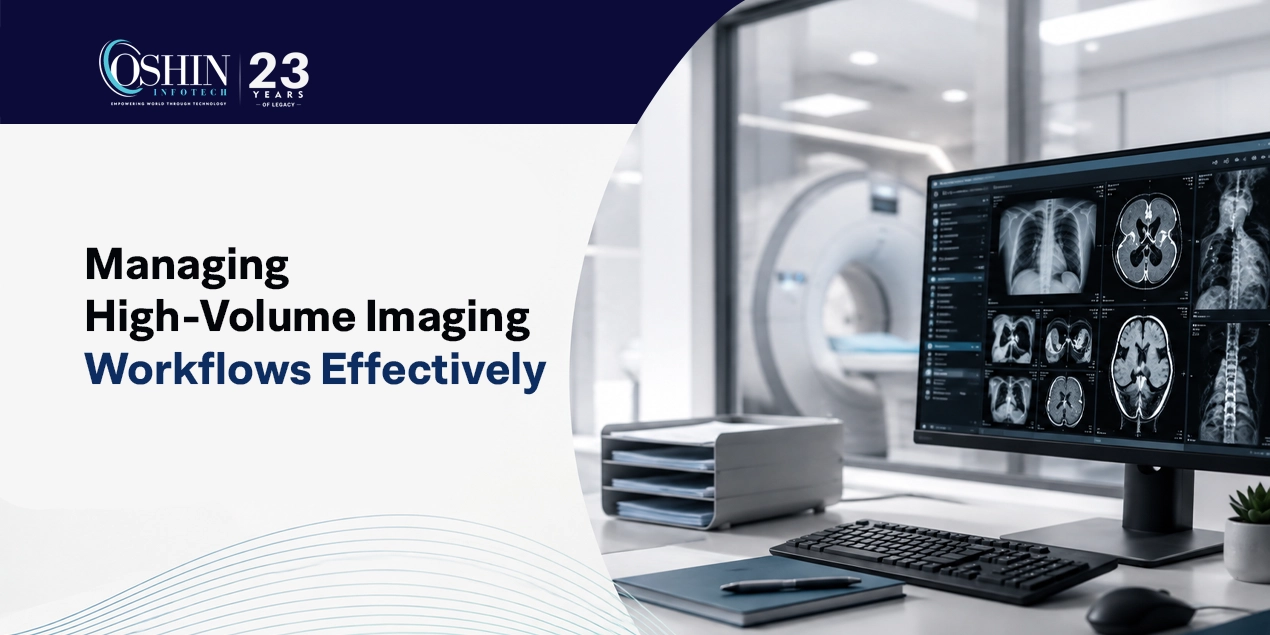
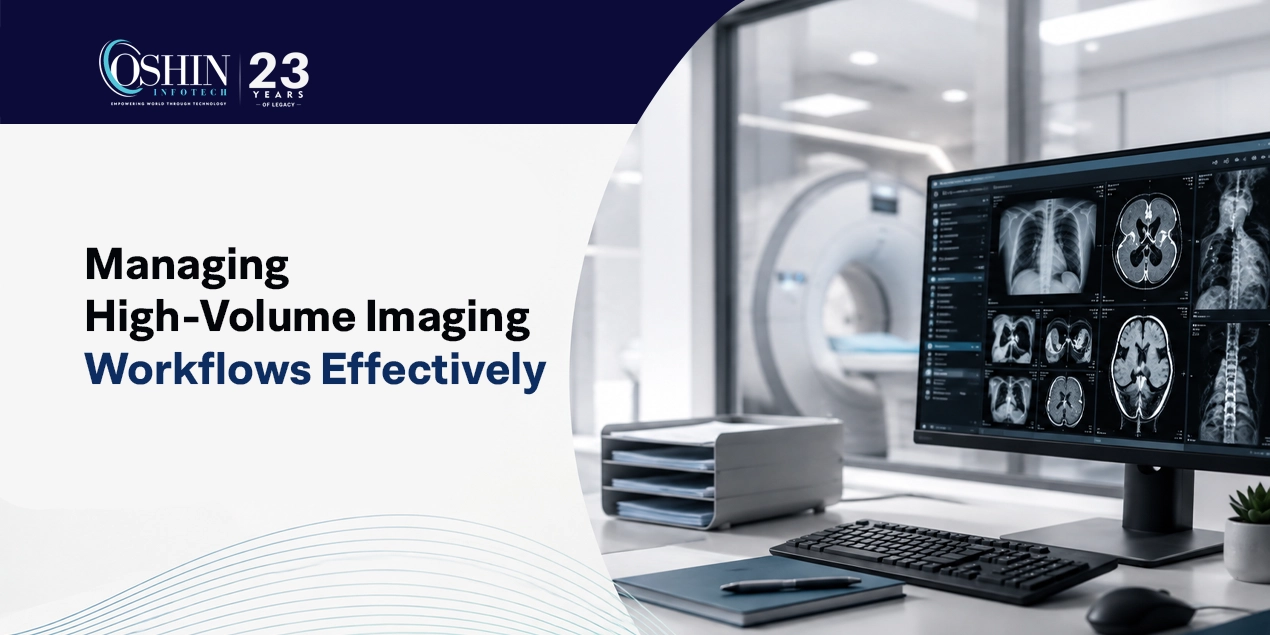
High Imaging Volume Is Not Just a Reporting Problem
As diagnostic imaging becomes more widely used across emergency, inpatient, outpatient and preventive care, healthcare organisations are managing increasingly complex reporting environments.
A rise in imaging volume can happen for many reasons.
A diagnostic centre may add a new MRI or CT scanner. A hospital may experience a sudden increase in emergency cases. A healthcare network may open additional facilities. Seasonal demand, staffing changes or temporary reporting gaps can also create periods of unusually high workload.
When case volumes rise, the immediate concern is often reporting speed.
But high-volume imaging is rarely solved simply by asking radiologists to report faster.
The real challenge is coordination.
Healthcare organisations need to understand what has entered the workflow, which cases should be prioritised, who should report them, what remains pending and where intervention is required.
Without that visibility, backlogs can build quickly.
What Creates Pressure in a High-Volume Imaging Workflow?
A reporting backlog does not always mean that an organisation lacks radiologists.
Sometimes the underlying problem is how work moves through the system.
Pressure can develop when cases are not prioritised clearly, studies enter the wrong reporting queue, clinical information is incomplete, cases are allocated manually without visibility, different modalities compete for the same reporting capacity, emergency and routine studies are mixed together, pending cases are not actively monitored, reporting demand changes faster than staffing arrangements, or multiple facilities send studies into an uncoordinated workflow.
A strong imaging operation therefore needs to manage the workflow as carefully as it manages reporting capacity.
Where High-Volume Reporting Pressure Commonly AppearsDiagnostic CentresWhen daily CT, MRI or X-ray volumes increase faster than reporting capacity. HospitalsWhen routine, emergency and inpatient imaging compete for reporting attention. Multi-Site NetworksWhen several locations contribute studies to the same reporting environment. Peak Operating HoursWhen a large number of studies enter the workflow within a short period. Staff ShortagesWhen internal radiology availability temporarily decreases. After-Hours PeriodsWhen fewer reporting resources are available but urgent imaging continues. |
The First Step Is Understanding the Queue
Before a healthcare organisation can improve a high-volume workflow, it needs visibility into what is actually happening.
How many cases are waiting? Which modalities are creating the largest backlog? How many are routine? How many are priority? How long has each study been pending? Which cases are assigned? Which cases are still waiting for allocation?
Without this information, teams may respond reactively.
They may focus on whichever case is noticed first rather than the case that should actually receive attention first.
Operational visibility creates the foundation for better decisions.
Not Every Study Should Have the Same Priority
One of the most important principles in high-volume radiology is that all cases should not be treated equally.
A routine outpatient examination and an emergency imaging study have very different clinical requirements.
When every case enters the same queue, urgent studies may become buried among routine work.
A more structured model separates studies according to clearly defined priority levels.
Priority LevelsEmergencyRequires immediate or highly prioritised attention. PriorityShould be reported within an accelerated timeframe. RoutineCan follow the organisation's standard reporting turnaround. |
Clear classification helps reporting teams focus capacity where it matters most.
A Structured High-Volume Reporting Workflow1. Study Received 2. Patient and Study Information Verified 3. Modality Identified 4. Priority Assigned 5. Case Routed to the Appropriate Reporting Queue 6. Radiologist Allocated 7. Reporting Status Monitored 8. Delay or Priority Escalation Applied Where Required 9. Report Completed and Delivered 10. Case Closed and Recorded |
Case Allocation Should Match Workload and Expertise
When imaging volumes increase, manual allocation can become difficult to manage.
A coordinator may need to balance multiple factors: modality, urgency, available radiologist, reporting scope, current workload, after-hours coverage and service-specific turnaround expectations.
Good allocation is therefore more than simply assigning the next available case.
The objective is to place each study into the reporting pathway most appropriate for its clinical and operational requirements.
This can help reduce uneven workloads and improve visibility across the reporting environment.
High Volume Requires Prioritisation, Not PanicWhen backlogs begin to grow, teams can become focused on reducing the total number of pending studies as quickly as possible. But queue size alone does not tell the full story. A more useful approach is to understand: Priority | Age of Case | Modality | Reporting Capacity | Clinical Requirement This allows organisations to decide which cases need immediate intervention and which can continue through the standard workflow. The goal is not simply to empty the queue. It is to manage the queue intelligently. |
Turnaround Time Should Be Monitored by Category
A single average turnaround-time figure can sometimes hide important workflow problems.
For example, an organisation may have a reasonable overall average while still experiencing unacceptable delays in priority cases.
High-volume workflows should therefore be monitored according to relevant categories, including emergency turnaround, priority turnaround, routine turnaround, modality-specific turnaround, site-specific turnaround and after-hours performance.
This gives operations teams a clearer picture of where pressure is developing.
Reporting Capacity Should Be Flexible
Imaging demand is not always predictable.
A reporting model designed only for average daily volume may struggle during sudden peaks.
Healthcare organisations therefore benefit from having access to flexible reporting capacity.
This may include internal reporting teams, defined overflow arrangements, teleradiology support or a combination of these models.
The objective is to create a system that can expand when required without disrupting the existing workflow.
Teleradiology can play an important role here by providing additional reporting capacity during defined periods of high demand.
What Makes a High-Volume Imaging Workflow More Resilient?Clear Priority RulesTeams should know how routine, priority and emergency studies are classified. Structured Case AllocationCases should be routed according to modality, urgency and reporting capability. Real-Time VisibilityOperations teams should be able to see pending, assigned, delayed and completed cases. Flexible Reporting CapacityAdditional reporting resources should be available when volume exceeds internal capacity. Defined EscalationTeams should know when and how delayed cases are escalated. Strong CommunicationRadiologists, operations teams and healthcare facilities should have clear channels for resolving workflow issues. |
Managing High Volume in Diagnostic Centres
Diagnostic centres often experience significant fluctuations in imaging demand.
Some days may remain manageable, while others create immediate reporting pressure.
This is especially common when centres introduce new modalities, expand operating hours or open additional branches.
A strong workflow allows diagnostic centres to distribute cases more effectively and avoid allowing one modality or location to create pressure across the entire reporting operation.
Teleradiology can also provide additional flexibility when internal reporting capacity becomes stretched.
The reporting partner becomes an extension of the centre's operational model rather than simply a place where excess cases are sent.
Managing High Volume in Hospitals
Hospital imaging environments can be particularly complex because reporting demand may include emergency, inpatient and routine examinations simultaneously.
The challenge is therefore not only volume. It is mixed clinical priority.
A hospital may have several routine studies waiting while a trauma scan enters the workflow and requires immediate reporting.
That means high-volume hospital workflows need clear separation between case types.
Priority logic, escalation pathways and active monitoring become essential.
When those processes are well defined, reporting capacity can be directed toward the studies that require it most.
Managing Volume Across Healthcare Networks
Multi-location healthcare organisations face another challenge: imbalance.
One facility may have excess reporting demand while another has significantly fewer studies.
Without central visibility, each location may manage its workload independently, even when reporting resources could be shared more efficiently.
A coordinated reporting model can help networks standardise case classification, balance workloads across locations, create consistent turnaround expectations, monitor performance centrally and allocate reporting capacity more efficiently.
This becomes increasingly important as healthcare networks grow.
Warning Signs That a Reporting Workflow Is Under Pressure✓Increasing number of pending studies ✓Frequent manual escalation ✓Priority cases waiting in routine queues ✓Inconsistent turnaround across modalities ✓Reporting delays concentrated at certain times of day ✓Repeated overflow to individual radiologists ✓Poor visibility into case status ✓High dependency on manual follow-up ✓Increasing number of cases carried into the next shift |
These signals often indicate that the workflow itself needs attention - not simply additional reporting effort.
High Volume Should Not Reduce Reporting Quality
When workload increases, there can be pressure to focus almost entirely on throughput.
But reporting quality remains essential.
A high-volume model should still support appropriate clinical review, relevant comparison imaging, structured reporting where appropriate, quality assurance, escalation, communication and reporting within defined scopes.
Efficiency should come from better workflow design, not from removing necessary clinical steps.
The objective is sustainable reporting performance.
Communication Prevents Small Problems From Becoming Backlogs
A missing clinical history, incomplete study or incorrectly classified case may appear to be a small problem.
But when hundreds of studies are moving through the workflow, small issues can accumulate quickly.
Healthcare organisations should establish clear communication channels between imaging facilities, workflow coordinators, radiologists, operations teams and authorised clinical teams.
This allows issues to be identified and corrected before they create wider delays.
After-Hours Workflows Need Separate Planning
A reporting process that works during daytime hours may not work equally well overnight.
After-hours periods often have lower staffing levels, higher proportions of urgent cases, different communication pathways and reduced on-site radiology support.
Organisations handling high imaging volumes should therefore consider separate after-hours workflows.
NightHawk reporting can support this by creating defined overnight reporting capacity while protecting priority cases from being lost within routine work.
KEY TAKEAWAYSHigh-Volume Imaging Is Best Managed as an Operational SystemEffective reporting at scale requires more than increasing the number of reports completed each hour. A resilient workflow combines clear case prioritisation, appropriate case allocation, flexible reporting capacity, active queue monitoring, defined escalation, reliable communication, quality processes and visibility across locations and shifts. When these elements work together, healthcare organisations can manage growing imaging demand without allowing reporting pressure to become operational instability. |
Questions Healthcare Organisations Should AskWhere Are Delays Actually Occurring?Is the pressure at intake, allocation, reporting or delivery? Are Priority Cases Clearly Identified?Urgent studies should not compete blindly with routine cases. Can We See the Full Reporting Queue?Teams need visibility into pending and delayed cases. Is Reporting Capacity Flexible?The organisation should be able to respond to unexpected increases in demand. Are Different Modalities Managed Appropriately?CT, MRI, X-ray and specialist imaging may require different reporting resources. Do We Have an Escalation Process?Delayed or priority cases should have defined escalation pathways. Can the Workflow Scale?The reporting model should support growth across volumes, operating hours and locations. |
Sustainable Reporting Comes From Better Workflow Design
High imaging volumes are becoming a normal operational reality for many healthcare organisations.
The challenge is not simply how to complete more reports.
It is how to manage a larger and more complex reporting environment while maintaining clinical priority, quality and operational control.
Healthcare organisations that structure their workflows around clear case classification, intelligent allocation, active monitoring and flexible reporting capacity are better positioned to manage changing demand.
Teleradiology can strengthen this model by providing additional reporting capability when internal capacity is stretched.
But the strongest results come when reporting capacity is supported by a disciplined operational workflow.
That is what turns higher imaging volume from a recurring problem into a manageable process.
OSHIN PERSPECTIVEHelping Healthcare Organisations Manage Reporting DemandOshin Infotech supports hospitals, diagnostic centres and healthcare networks with teleradiology reporting workflows designed around real operational requirements.Our approach combines radiology expertise with structured case allocation, priority-based workflows, reporting coordination and operational visibility.Whether an organisation is managing increased daily volume, expanding across locations, supporting after-hours requirements or addressing temporary reporting pressure, the focus remains on building a dependable workflow that can adapt as imaging demand changes. |