Healthcare Does Not Stop After Business Hours
Radiology requirements are not limited to daytime operations.
Emergency departments, trauma units, inpatient services and diagnostic facilities may continue receiving imaging studies throughout the night. Priority cases can also arise during weekends, holidays and periods when normal staffing levels are reduced.
For healthcare organisations, this creates an important operational challenge.
How can radiology reporting remain available when internal teams have limited after-hours capacity?
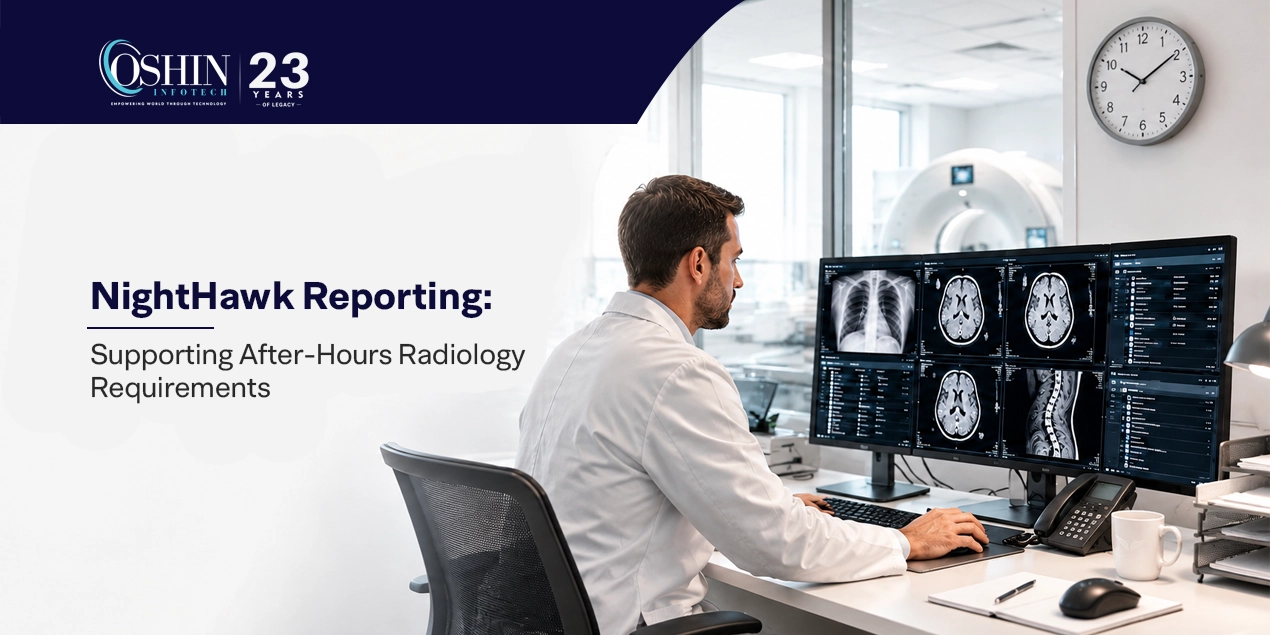
NightHawk reporting provides one answer.
It allows healthcare organisations to extend access to radiology expertise beyond their regular reporting schedules through a dedicated after-hours workflow.
The objective is not simply to provide someone who can read an image overnight.
A dependable NightHawk model must create continuity between the imaging facility, the reporting radiologist and the clinical team waiting for the report.
What Is NightHawk Reporting?
NightHawk reporting refers to radiology reporting services designed specifically for nights, weekends and other defined after-hours periods.
Imaging studies generated during these hours are transmitted through an established teleradiology workflow and allocated to radiologists according to modality, urgency and service requirements.
Depending on the organisation, NightHawk coverage may support emergency CT, priority X-ray, selected MRI examinations, trauma imaging, urgent inpatient studies and defined after-hours outpatient examinations.
The precise scope depends on the reporting arrangement between the healthcare organisation and its teleradiology partner.
What matters most is that the workflow is established before the urgent study arrives.
Where NightHawk Reporting Can Support Healthcare OrganisationsEmergency DepartmentsMaintain access to reporting for urgent imaging outside regular hours. HospitalsSupport inpatient, emergency and priority examinations overnight. Diagnostic CentresExtend reporting availability when imaging services continue beyond daytime schedules. Multi-Site Healthcare NetworksCreate a coordinated after-hours reporting model across different facilities. Weekend and Holiday CoverageMaintain continuity when routine staffing arrangements may be reduced. Reporting OverflowSupport internal radiologists when after-hours workloads exceed available capacity. |
Why After-Hours Radiology Requires a Dedicated Workflow
After-hours reporting is different from routine daytime reporting.
The number of cases may be lower, but the proportion of time-sensitive studies can be higher. An imaging study received at night may be linked to an emergency presentation, trauma assessment or inpatient deterioration.
This makes prioritisation especially important.
If every study enters the same reporting queue without distinction, genuinely urgent cases may compete with examinations that can reasonably wait.
A dedicated NightHawk workflow creates a clearer structure around case classification, urgency, allocation, turnaround expectations, escalation and communication.
The value comes from organising the reporting environment around the needs of after-hours care.
Priority Begins at Case Intake
A fast report depends on more than the radiologist.
The workflow begins when the imaging study is received.
Before reporting starts, the service needs enough information to understand what the case is, why it matters and how quickly it should be handled.
This may involve checking modality, clinical indication, patient details, priority category, relevant previous imaging and availability of the complete study.
Accurate classification at this stage helps ensure urgent cases enter the appropriate reporting pathway from the beginning.
A Typical NightHawk Reporting Workflow1. Study Received During After-Hours Period 2. Patient and Case Information Verified 3. Priority Identified 4. Case Allocated to the Appropriate Radiologist 5. Images and Available Clinical Information Reviewed 6. Report Prepared 7. Urgent Communication or Escalation Applied Where Required 8. Report Delivered to the Healthcare Organisation 9. Case Status Closed and Documented |
Turnaround Time Must Reflect Clinical Priority
One of the most important aspects of NightHawk reporting is setting clear turnaround expectations.
Not every case requires the same reporting speed.
Emergency Cases: Cases requiring immediate or highly prioritised reporting.
Priority Cases: Studies that should be interpreted within a defined accelerated timeframe.
Routine After-Hours Cases: Examinations that can follow the standard overnight reporting workflow.
This separation allows reporting resources to be directed where they are most clinically important.
It also helps both the healthcare organisation and reporting team understand what should happen when multiple studies arrive simultaneously.
Speed Without Structure Can Create New ProblemsThe pressure to deliver faster reports can sometimes create an overly narrow focus on turnaround time. But NightHawk reporting should not be reduced to speed alone. The more dependable objective is: Timely Reporting | Clinical Accuracy | Clear Priority | Reliable Communication | Operational Visibility A fast report is useful only when the right case has been prioritised, the necessary information is available and the report reaches the appropriate healthcare team. After-hours reporting therefore needs both clinical capability and operational discipline. |
Clinical Information Still Matters at 2 A.M.
The reporting radiologist may not be physically present in the hospital, which makes clinical information especially important.
A short but relevant indication can provide meaningful context.
For example, knowing whether a scan has been requested because of trauma, acute neurological symptoms or postoperative concerns can help the radiologist understand the clinical question being investigated.
Where available, previous imaging may also provide useful comparison.
A dependable NightHawk workflow therefore encourages healthcare teams to send appropriate clinical information together with the imaging study.
Remote reporting should not mean reporting without context.
Communication Becomes More Important After Hours
During daytime operations, clinical and radiology teams may have multiple channels for resolving questions.
After hours, those channels can become narrower.
That makes clear communication protocols particularly important.
Healthcare organisations and their reporting partners should know what happens when clinical history is missing, images are incomplete, a case has been incorrectly prioritised, a technical transmission issue occurs, an urgent finding requires communication, the reporting radiologist needs clarification or a report requires escalation.
A good NightHawk workflow defines these pathways before they are needed.
What Makes an Effective NightHawk Reporting Service?Clearly Defined CoverageBoth teams should understand which modalities, locations and case types fall within the after-hours service. Priority-Based Case AllocationEmergency, priority and routine cases should not be treated identically. Dependable Radiology AvailabilityThe reporting model should align radiologist availability with expected after-hours requirements. Communication ProtocolsClear processes should exist for clarifications, escalations and urgent communication. Operational MonitoringPending, delayed and escalated studies should remain visible to the operations team. Reporting QualityAfter-hours reporting should follow the same commitment to clinical accuracy and professional standards as daytime reporting. |
NightHawk Reporting for Emergency Departments
Emergency departments are among the clearest use cases for after-hours radiology support.
Imaging can influence decisions around further investigation, observation, referral or treatment pathways.
When internal radiology coverage is limited during the night, delays in reporting may create pressure on the wider emergency workflow.
A dedicated NightHawk service can help create continuity by providing a defined reporting route for urgent imaging.
This works best when emergency teams understand how studies should be prioritised and the reporting provider understands the organisation's escalation expectations.
NightHawk Reporting for Hospitals
Hospitals may require after-hours reporting across emergency, inpatient and specialty departments.
The workflow can therefore involve different levels of urgency.
For example, a routine inpatient study and an emergency trauma scan should not compete equally for reporting attention.
Hospitals need reporting systems that can recognise these differences and coordinate cases accordingly.
When properly integrated, NightHawk services can become an extension of the hospital's existing radiology operations rather than a disconnected overnight function.
NightHawk Reporting for Diagnostic Centres
Some diagnostic centres operate extended hours or complete examinations late in the day.
Without after-hours reporting capacity, those studies may remain pending until the following reporting period.
NightHawk arrangements can provide additional flexibility where earlier reporting is operationally or clinically required.
This can also help centres manage peak volumes by reducing the number of studies carried forward into the next working day.
The result can be a more balanced reporting workload across the full operating cycle.
Supporting Internal Radiology Teams, Not Replacing Them
NightHawk reporting does not need to replace an organisation's existing radiology team.
In many cases, its strongest role is complementary.
Internal radiologists may continue managing core daytime services while after-hours reporting is supported through an external teleradiology model.
This can provide healthcare organisations with greater operational flexibility while helping internal teams manage workload distribution more effectively.
The ideal arrangement depends on the organisation's case volumes, operating hours and reporting requirements.
When NightHawk Support May Be Particularly Useful✓ Limited overnight radiologist availability ✓ High emergency imaging volumes ✓ Multiple hospital or diagnostic locations ✓ Weekend or holiday reporting gaps ✓ Increasing CT and MRI demand ✓ Need for additional after-hours reporting capacity ✓ Expansion of operating hours ✓ Requirement for structured priority reporting |
Quality Standards Should Not Change at Night
After-hours reporting should not operate under lower standards simply because it happens outside normal working hours.
The same principles of clinical accuracy, appropriate reporting scope and professional communication continue to apply.
Quality processes may include defined reporting protocols, structured report formats where appropriate, case review, feedback mechanisms, discrepancy tracking, escalation review and operational performance monitoring.
Maintaining these processes helps ensure that NightHawk reporting remains integrated with the wider quality framework of the healthcare organisation.
Operational Visibility Prevents Cases From Being Lost in the Queue
One of the challenges of overnight reporting is that fewer people may be actively monitoring the workflow.
This makes visibility important.
Operations teams should be able to identify newly received cases, priority status, cases awaiting allocation, cases currently being reported, delayed studies, escalated cases and completed reports.
This visibility allows teams to intervene before a reporting delay becomes a wider clinical or operational issue.
NightHawk reporting works best when the service is actively coordinated rather than passively waiting for cases to move through the system.
KEY TAKEAWAYSNightHawk Reporting Is About Continuity, Not Just Overnight Coverage A strong NightHawk model brings together appropriate radiology expertise, priority-based workflows, defined turnaround expectations, clinical information, clear escalation pathways, reliable communication, quality processes and active operational coordination. Its purpose is to help healthcare organisations maintain dependable reporting access when their normal daytime resources are reduced. |
Questions to Ask Before Implementing NightHawk Reporting
Which Hours Need Coverage?The service window should be clearly defined.
Which Modalities Are Included?Coverage requirements may differ across CT, MRI, X-ray and other imaging services.
What Counts as an Emergency or Priority Case?Priority categories should be agreed in advance.
What Are the Expected Turnaround Times?Different categories should have appropriate service expectations.
How Are Urgent Findings Communicated?The escalation pathway should be clearly understood.
Who Monitors Pending Cases?Operational ownership should be defined.
How Does the Service Connect With Daytime Operations?There should be a clear handover process where cases continue across shifts.
Reliable After-Hours Reporting Requires More Than an Overnight Radiologist
NightHawk reporting can play an important role in helping hospitals and diagnostic centres maintain continuity outside regular working hours.
But successful after-hours coverage requires more than simply making a radiologist available remotely.
The reporting workflow must understand urgency, route cases appropriately, maintain communication and provide visibility into what is happening across the reporting queue.
When these elements work together, healthcare organisations can create a more dependable bridge between daytime radiology services and after-hours clinical requirements.
That is where NightHawk reporting delivers its greatest value.
OSHIN PERSPECTIVESupporting After-Hours Radiology With Structured Reporting WorkflowsOshin Infotech supports hospitals, diagnostic centres and healthcare networks with NightHawk and after-hours teleradiology reporting designed around their operational requirements.Our approach combines radiology expertise with priority-based case allocation, defined reporting workflows, operational coordination and clear communication.Whether an organisation requires overnight emergency coverage, weekend reporting support or additional capacity during defined after-hours periods, the focus remains the same: helping maintain dependable access to radiology reporting when routine resources may be limited. |